Behind the Scenes: Visual Strategy
The promise of graphic recording…
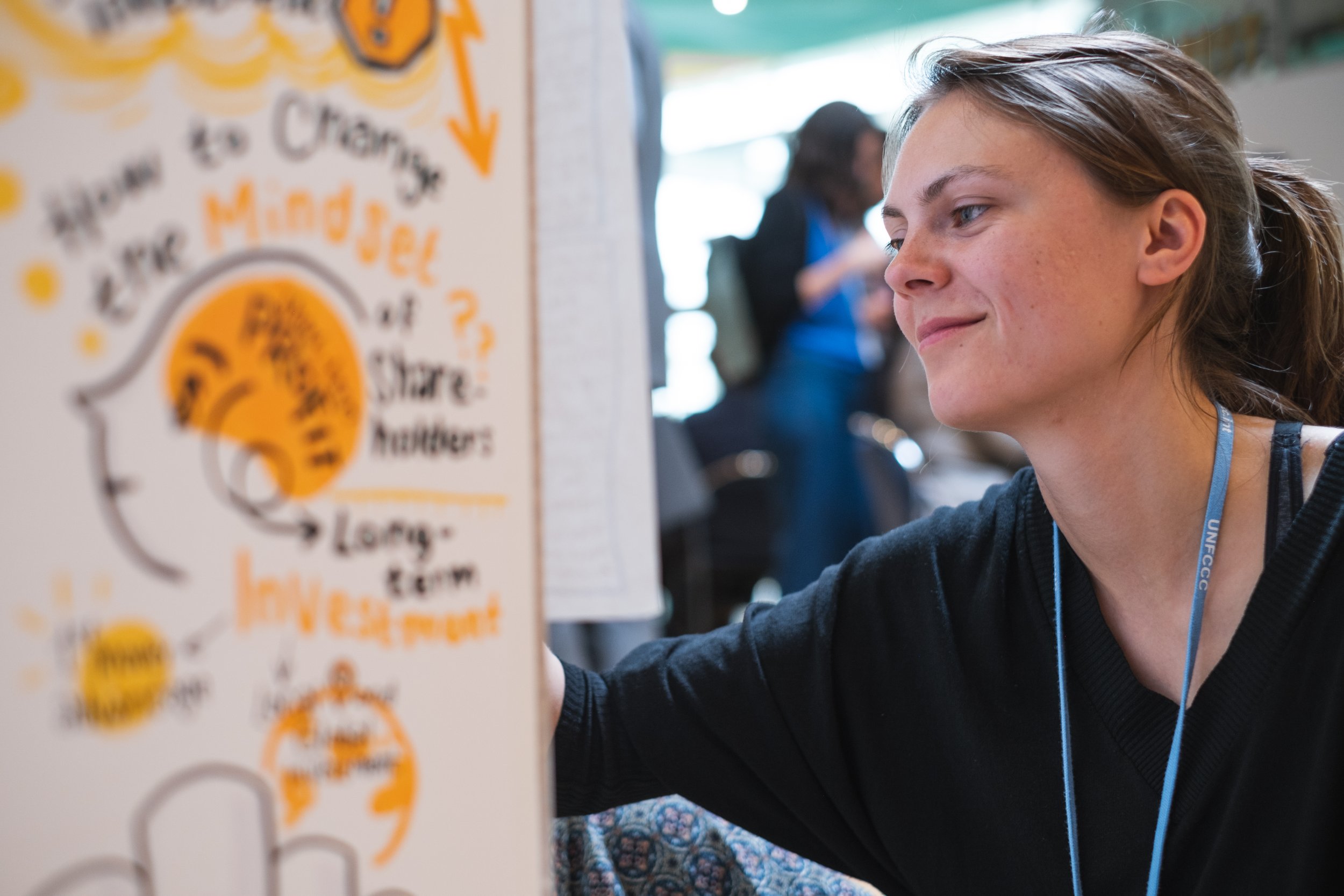
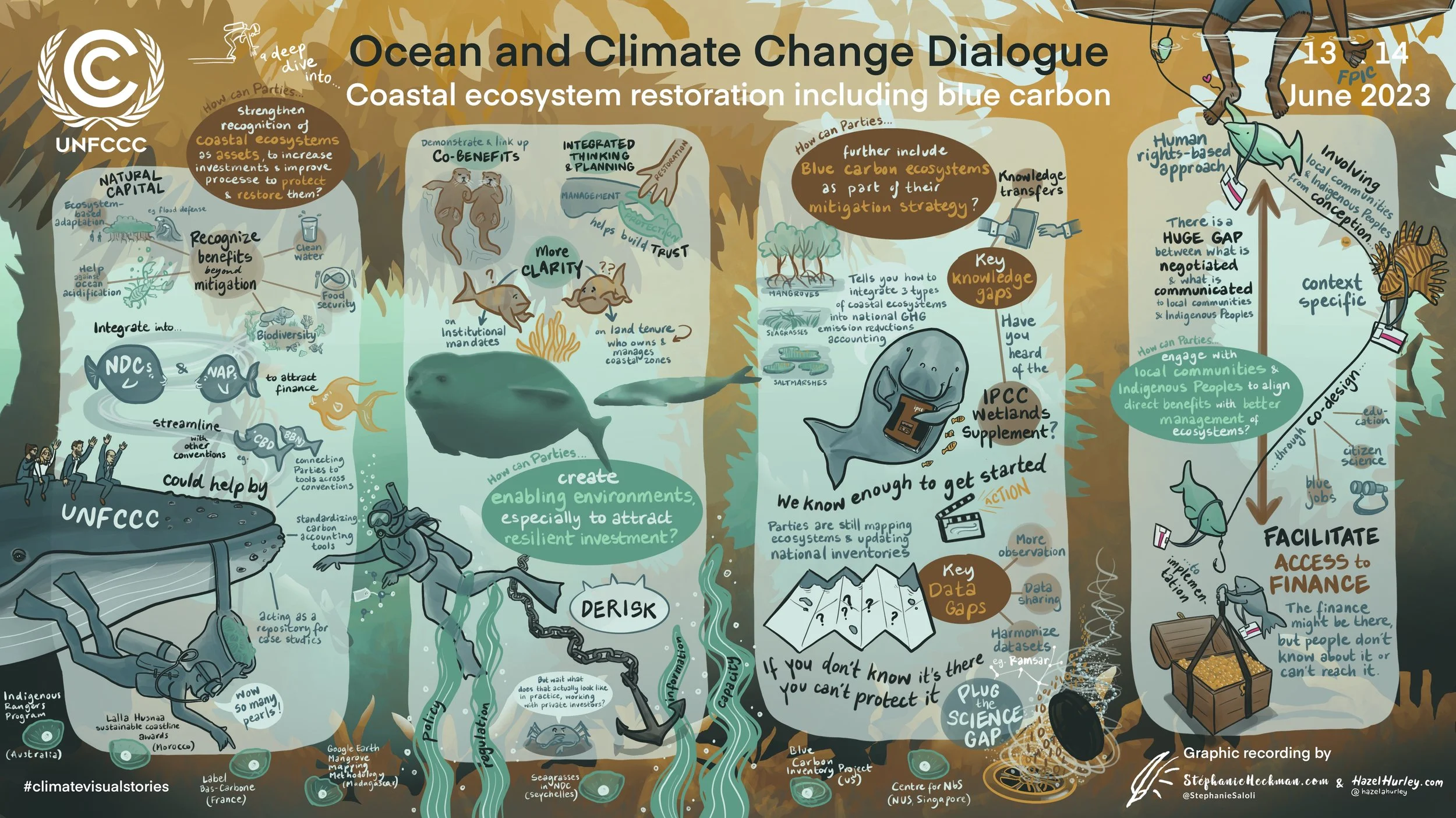
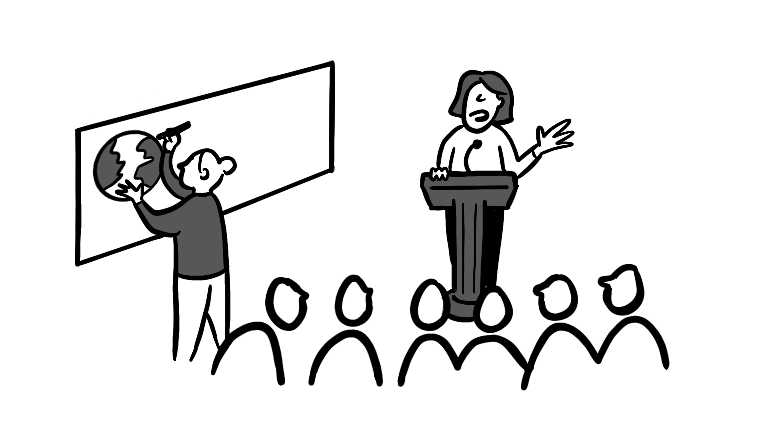
Since 2018 I’ve worked with close to 200 organisations, primarily as a graphic recorder at conferences. My role in those spaces is to listen closely and in real time translate what is happening into a hand-drawn visual summary.
This involves more than capturing what is said. It requires a particular kind of deep attention: absorbing everything from the language people use to the relational undercurrent in a room. What is emphasised, what is left unsaid, who gets to speak by default, who keeps quiet and why. From all that input, I distil what feels essential and relevant and translate that into a visual that combines words with images. The original words of the speakers retain their precision, but are held alongside images that make meaning more immediate and more widely accessible.
And when the audience engages with this process, it creates an opportunity for reflection. Something is made visible and can be looked at together. People recognise their own thinking, often with greater clarity, and can respond to it — confirming it, adjusting it, or being surprised by it. That reflective aspect of the work has come to feel as important to me as the visual output itself.
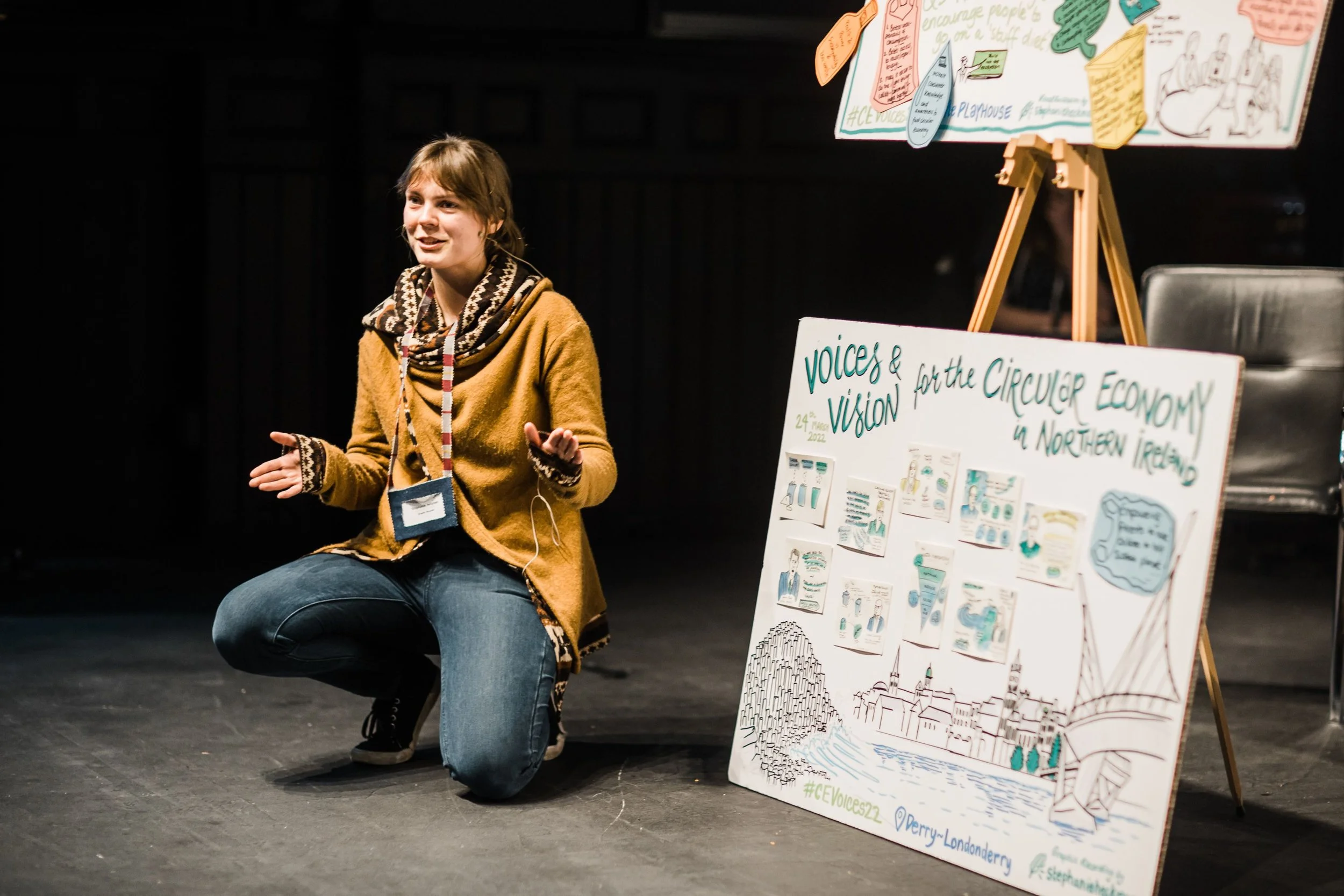
Narrated ‘visual recap’ using a graphic recording at the end of a conference
…and its limitations
Yet there are limits to this way of working. Graphic recording engagements are brief by definition. I am present only for the duration of a short event. I witness, I translate, and then I step away again. And the visual summary rarely gets to fulfil its full potential.
Visuals for strategy development
There is a depth of understanding that can only be reached by staying longer, moving beyond the role of observer into a more collaborative position within a team’s thinking process. Alongside my conference work, there have over the years also been projects of a different kind. These have been longer, more internal collaborations, often less visible to an external audience and more embedded within a team’s ongoing work.
Visual Theories of Change
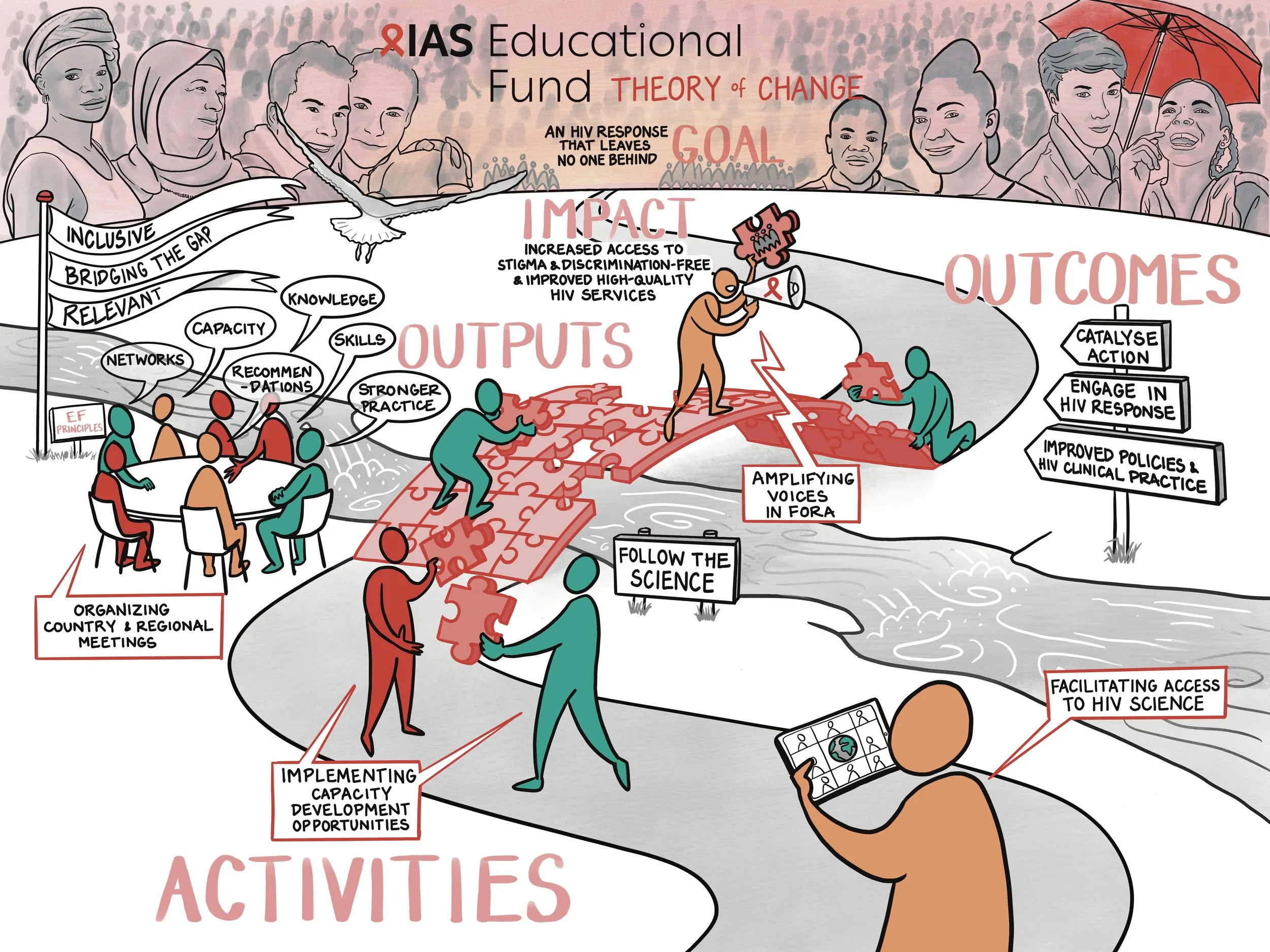
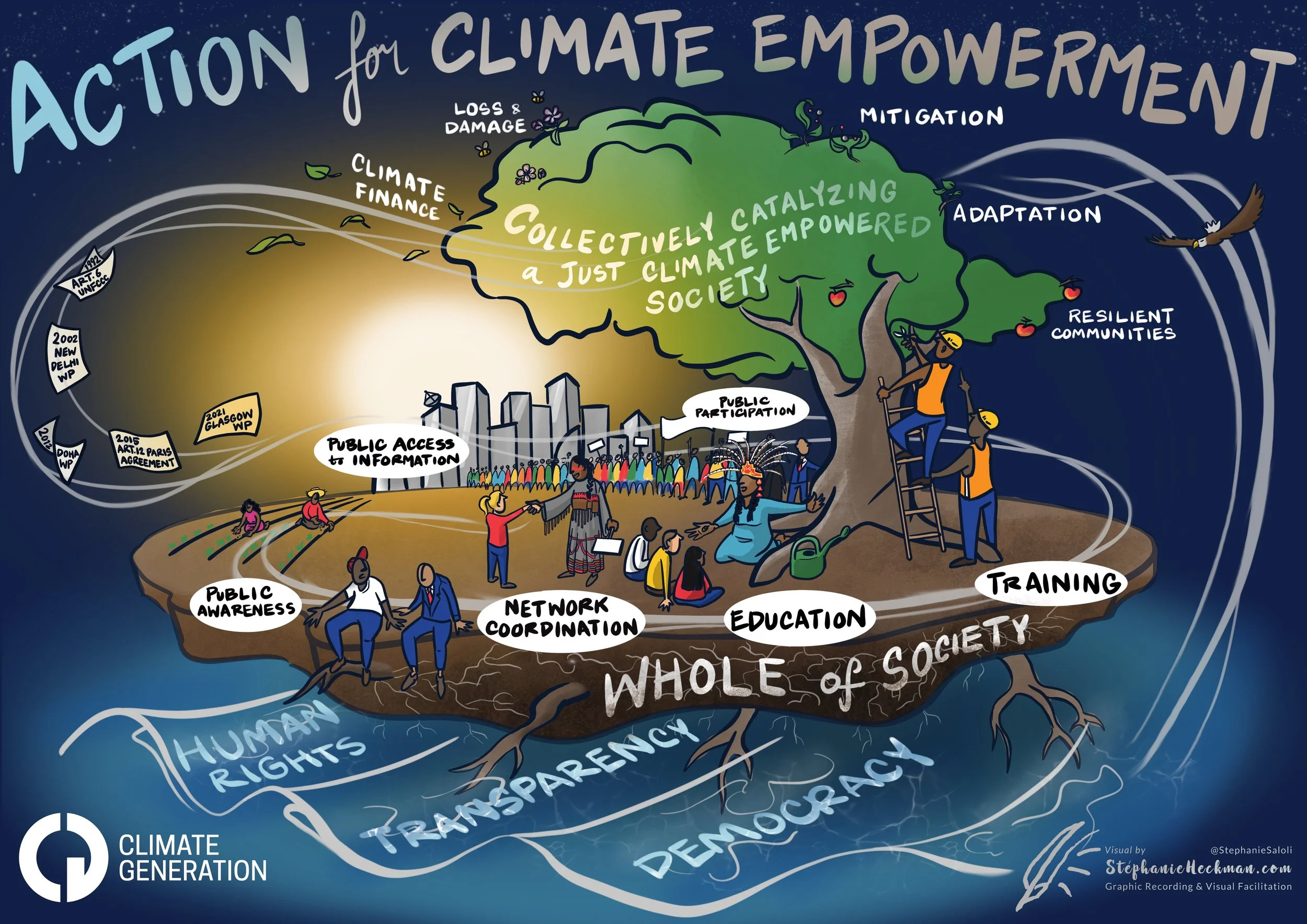
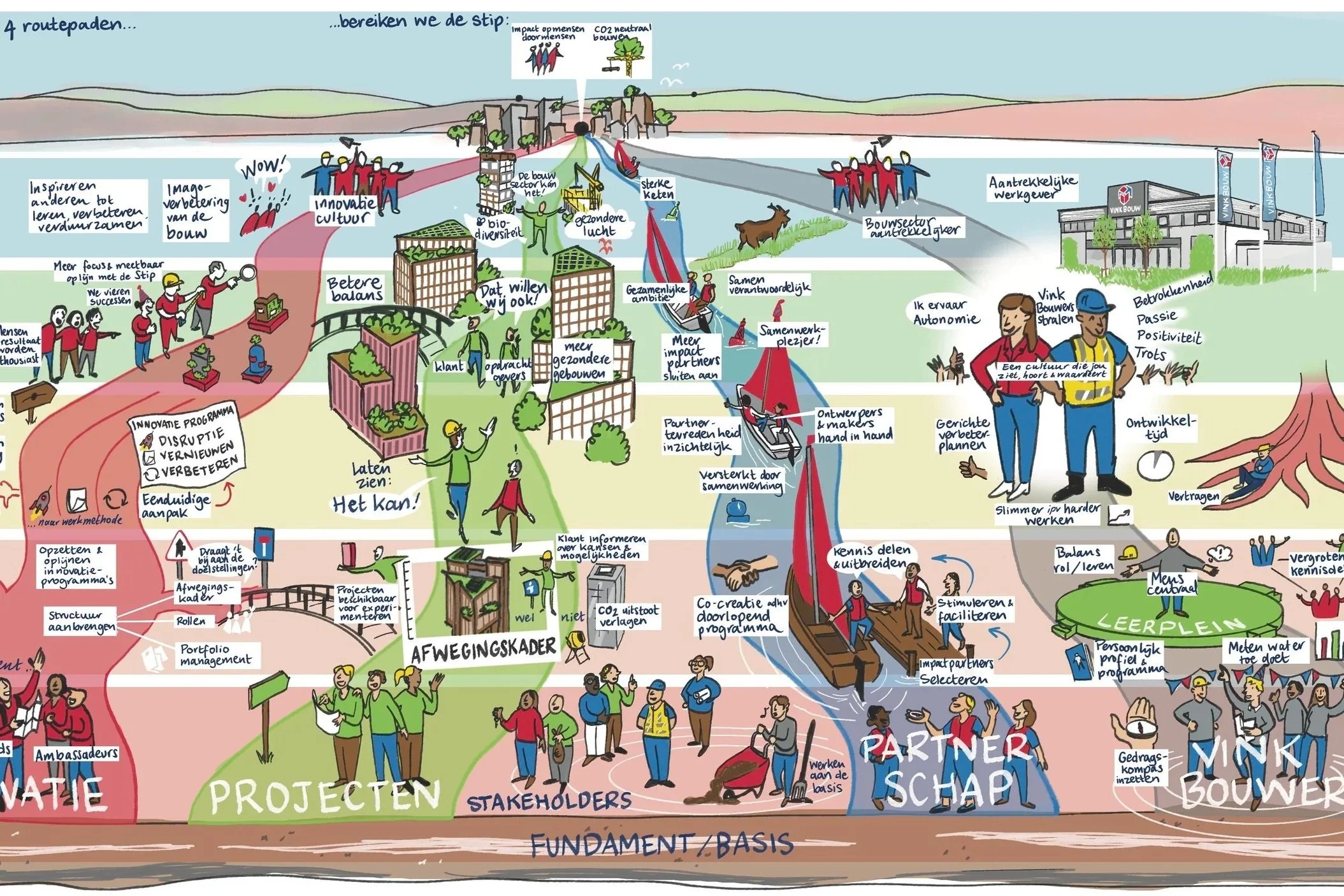
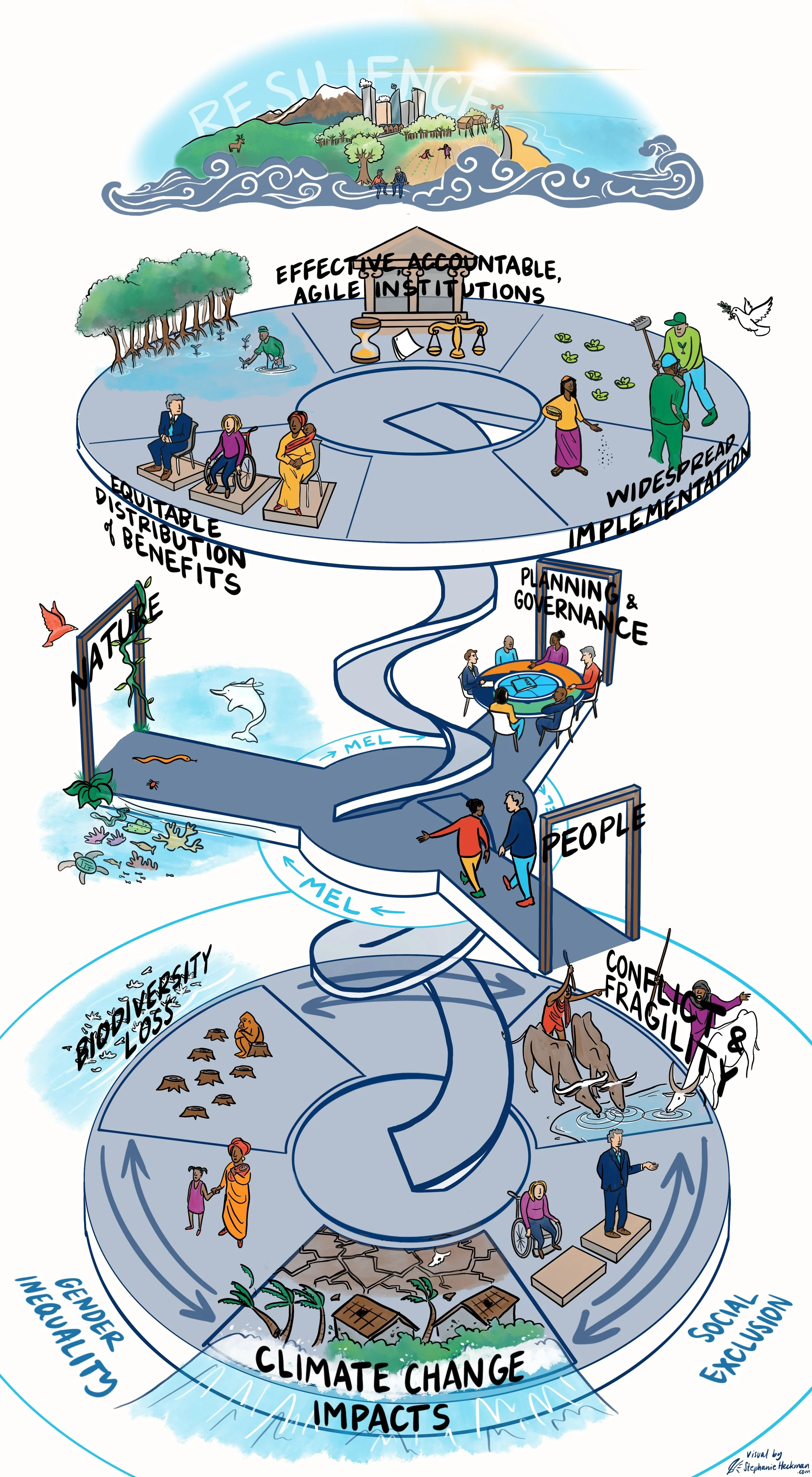
For example, I’ve worked with organisations to develop a visual theory of change (ToC). This often means taking the text and simplistic Powerpoint diagrams that a team has been working with, and transforming these into a single, layered and coherent visual that brings together what they do, why they do it, and how change happens through their work. Between 2020 and 2022 the visual theories of change I developed for the International Aids Society (IAS) were so well received that I was asked back by five different teams within the organisation to develop their own ToC. My recent work with the Resilience Programme of the IISD was also a visual ToC – see the case study below.
Visual Strategic Plans
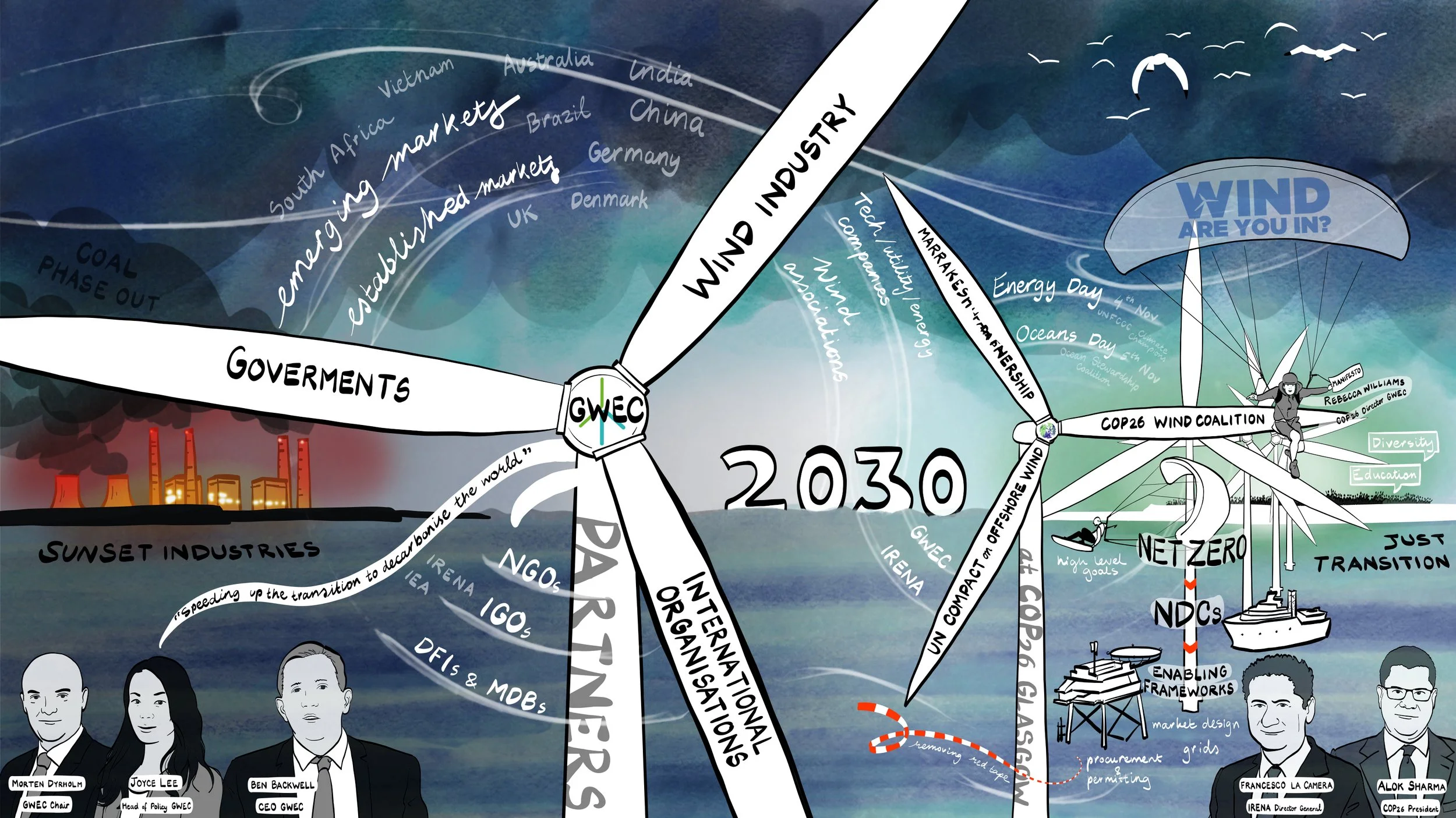
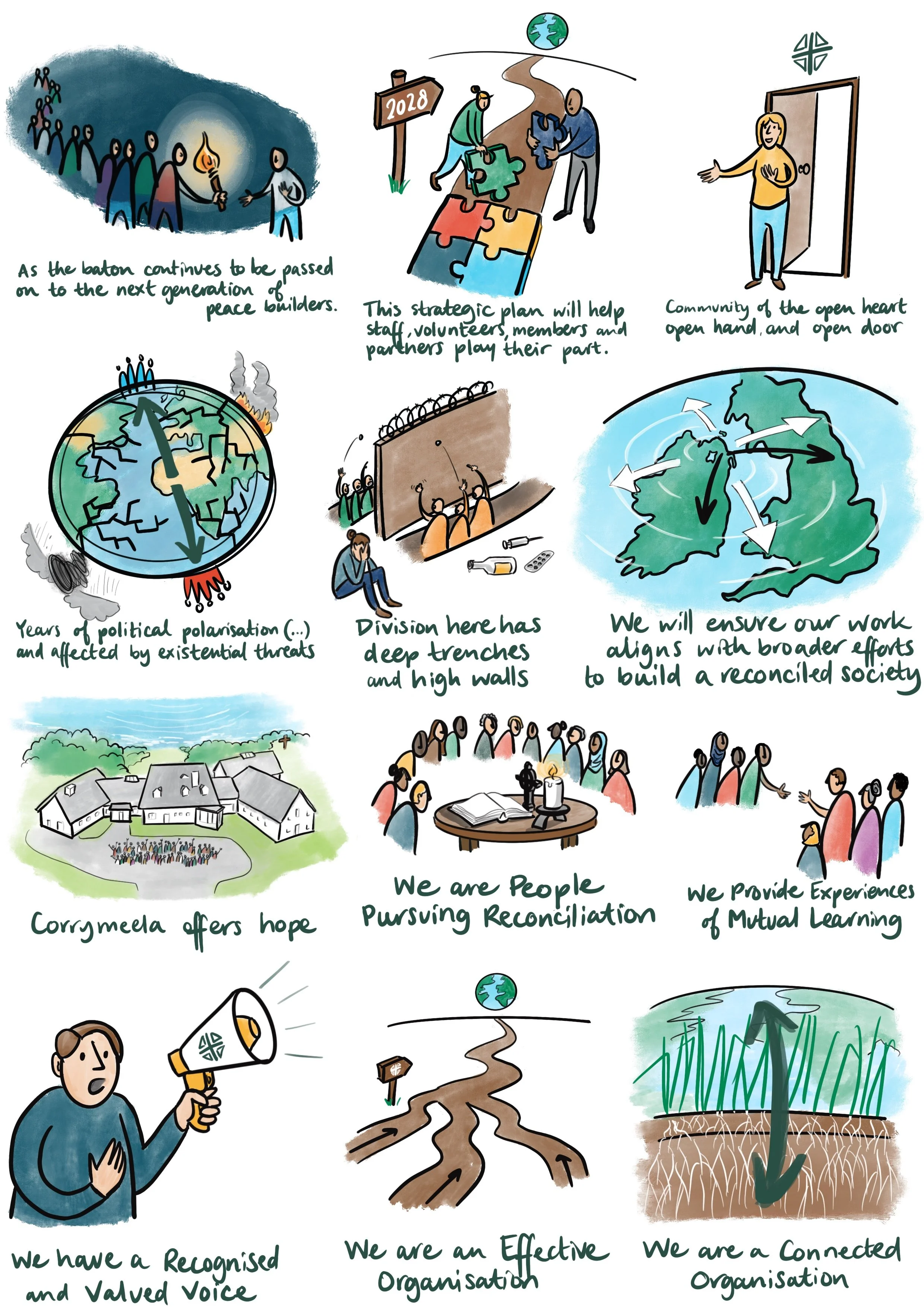
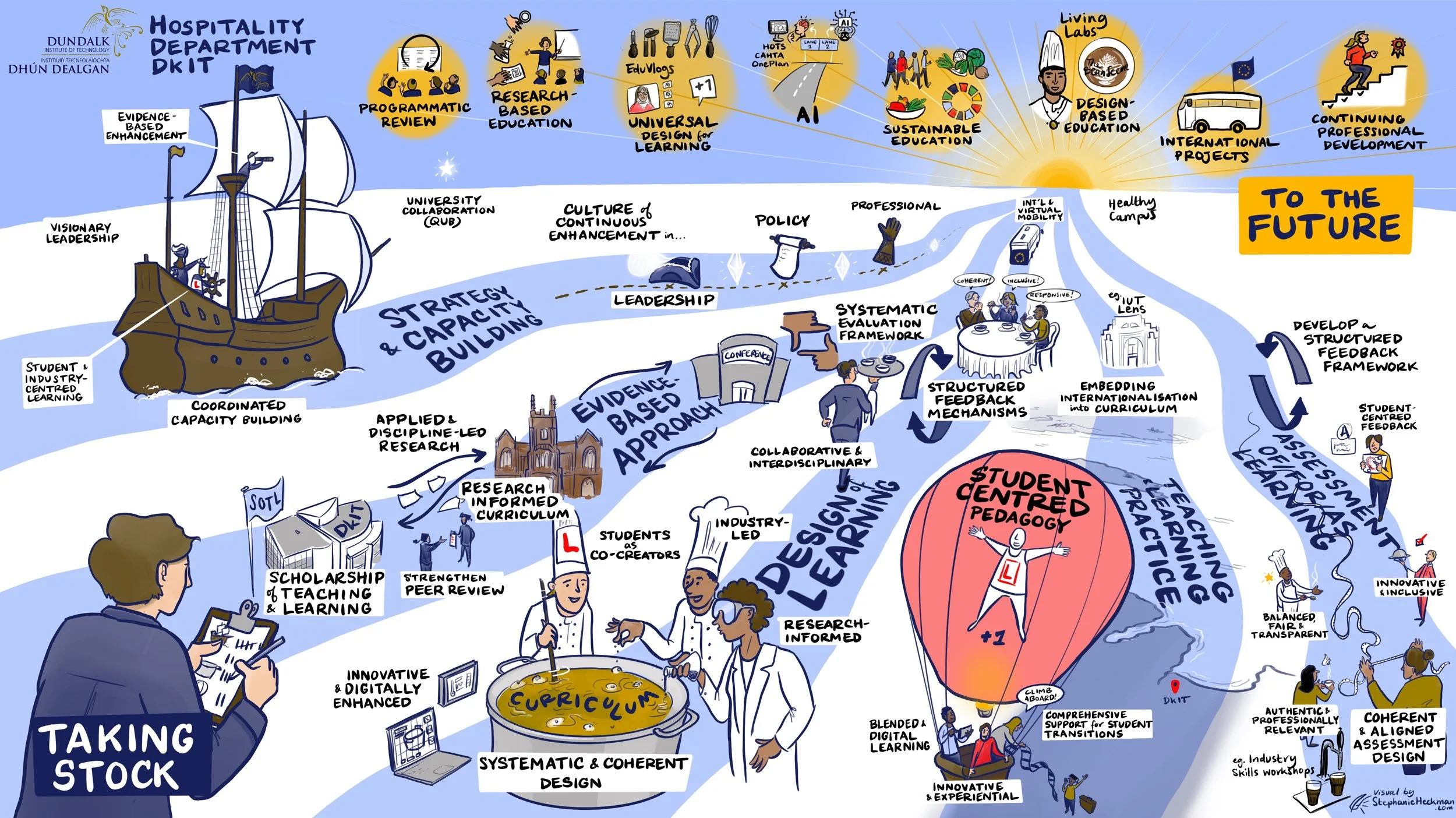
Or working alongside teams as they shape their medium-term strategies — often on three- to five-year timelines. In these processes I help them translate what would otherwise sit across multiple documents, and be explained in as many ways as there are colleagues, into a single, coherent visual framework or series of illustrations with a shared language, that holds the direction, the priorities, and the relationships between different strands of work. I did this recently for the Corrymeela Community, who used the Visual Strategy as an ‘executive summary’ to introduce their new direction to their membership base as well as to funders and partners.
Team retreats
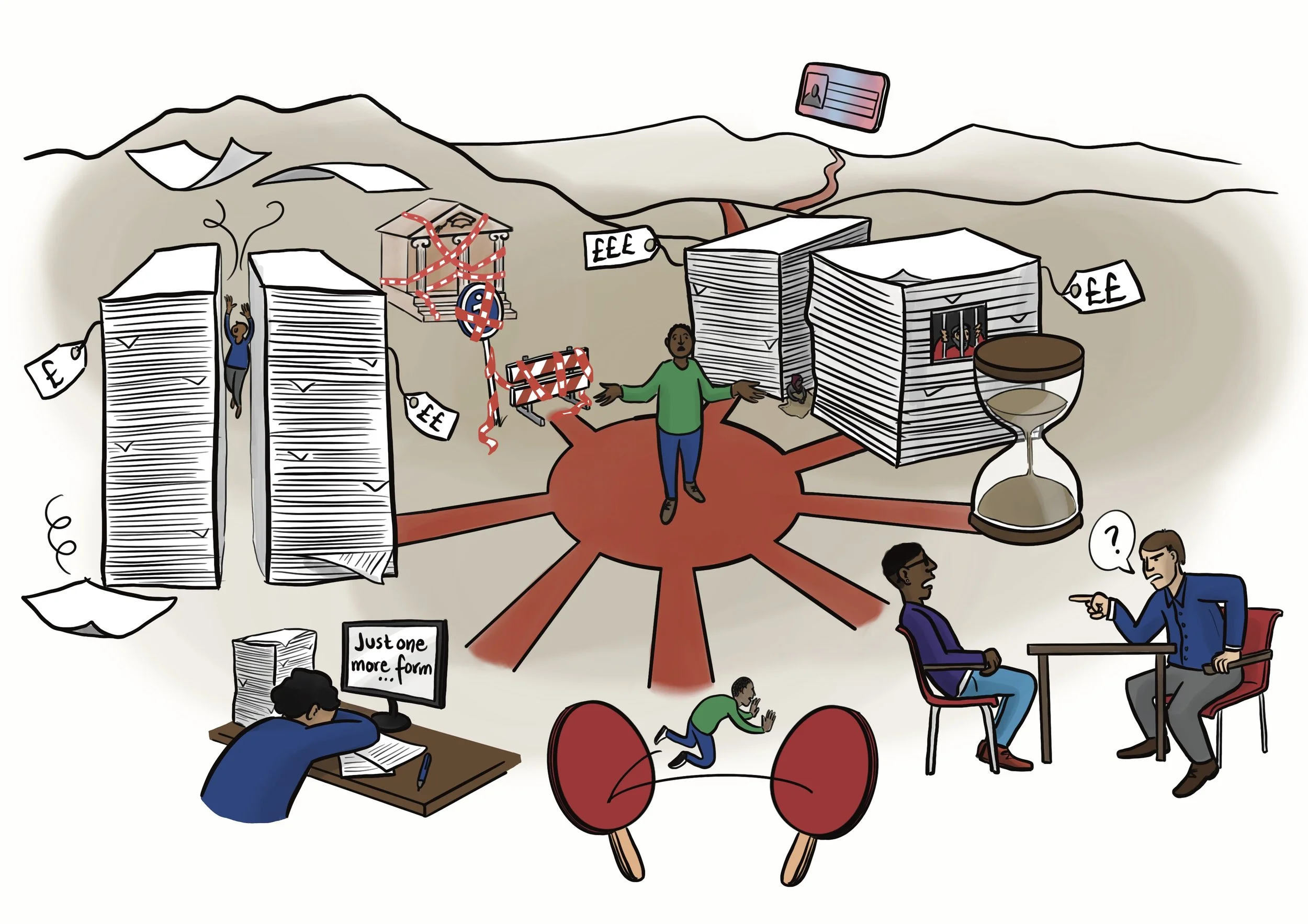
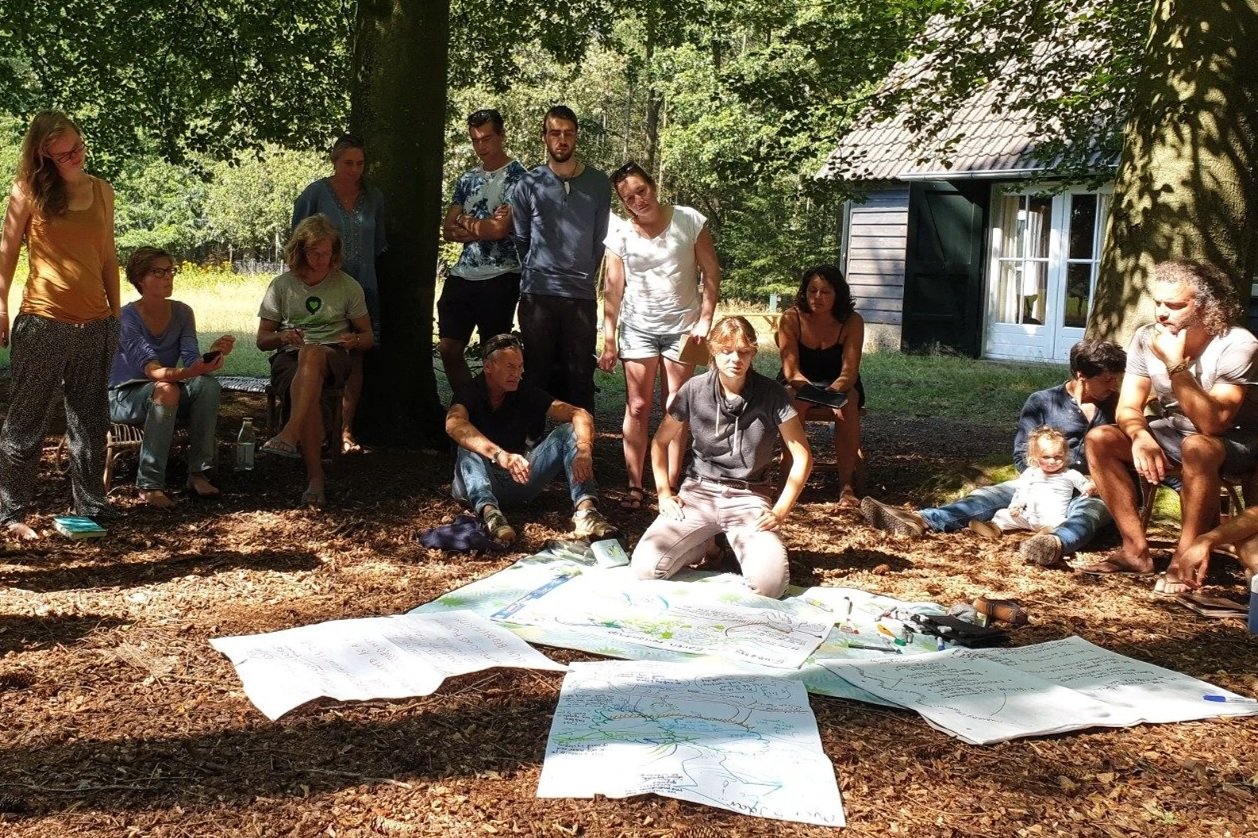
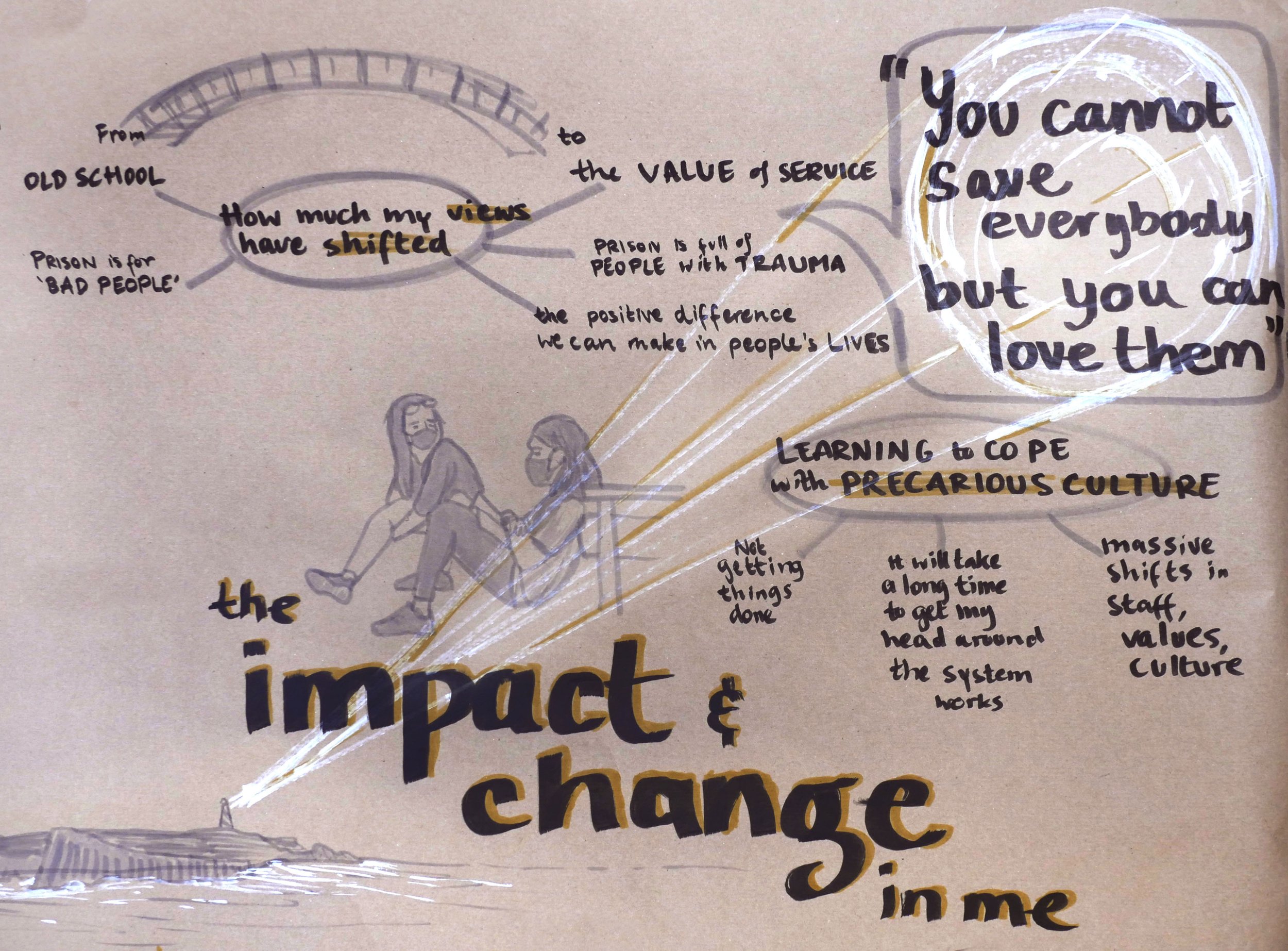
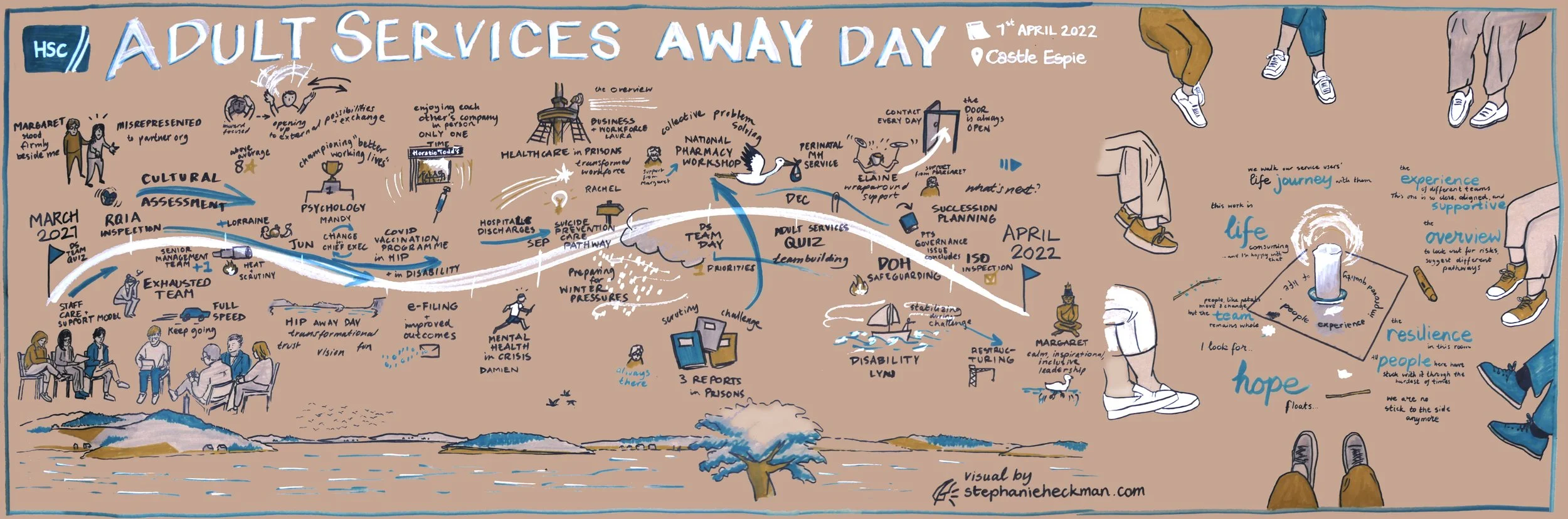
I’ve also joined teams on their retreats, where the focus is not outward communication but internal reflection: creating space for people working in demanding contexts to step back, spend time together, and reconnect with each other as well as the purpose and objectives of their work. Having a shared canvas that reflects their time together back to them has been a very powerful tool to make all team members feel seen and heard and to realign with each other. A memorable example of this was joining the Health and Social Care team for Northern Ireland’s prisons on their team retreat in 2021.
Visual communication materials
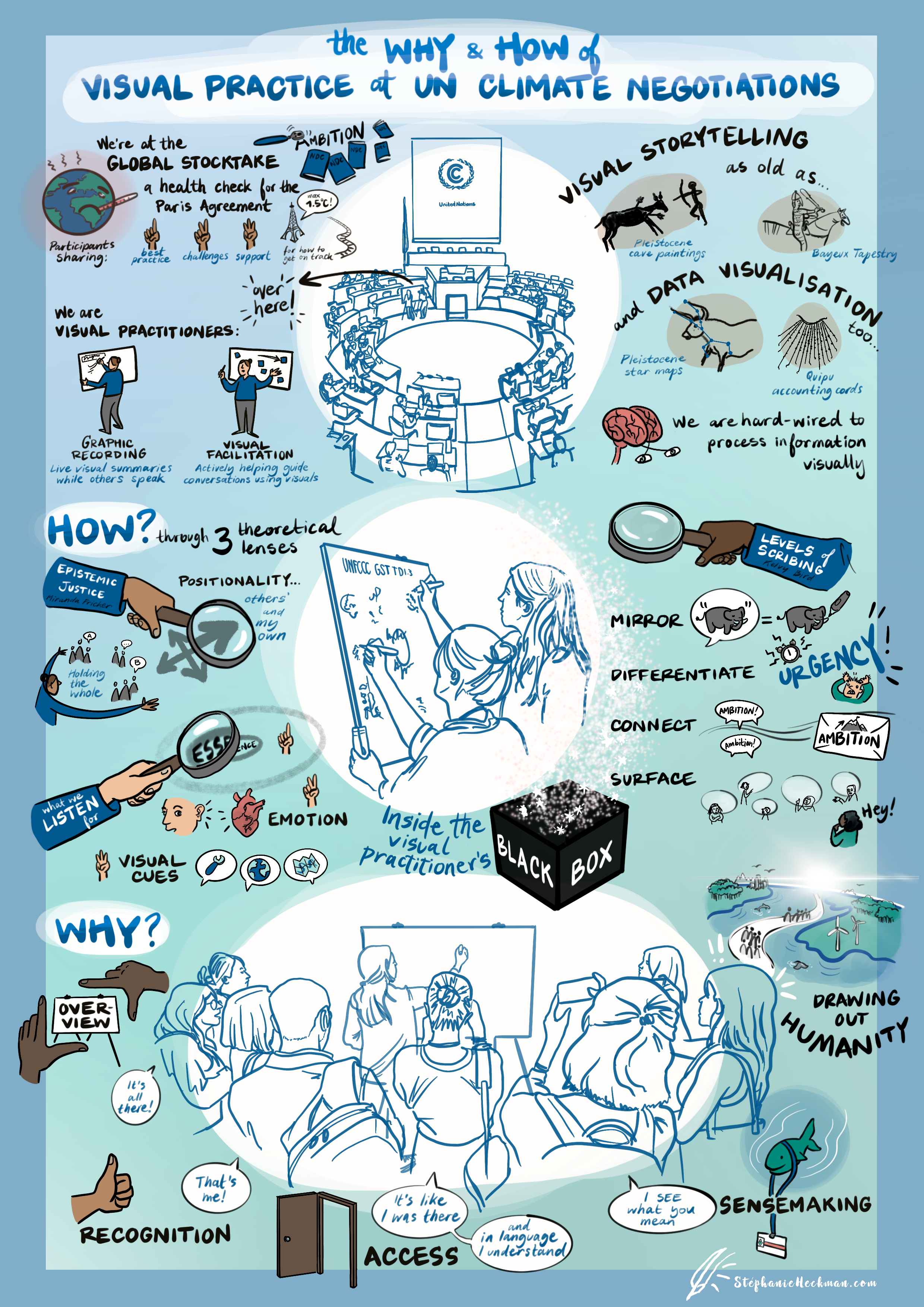
There have been other projects where I developed strategic visuals together with teams. Examples are an infographic rigorously co-edited by a panel of experts live in the room together, creating a visual counterpart to an award application, and turning an entire academic article (my own!) into a one-page visual summary — see the examples below. The common elements remain the same; taking a lot of complex content, and through a co-creative process consolidating it down into powerful, comprehensive, striking visuals that help tell the story more effectively.
Case study:
a visual Theory of Change for IISD
From late 2024 and early 2025 I worked together with the Resilience Programme of the International Institute for Sustainable Development, or IISD, a renowned think tank whose Earth news Bulletin is the authoritative reporting service on UN environment and development negotiations. In an intensive collaboration with many a back-and-forth over six months, we worked to co-create a draft visual counterpart to their Theory of Change. We got to drill down deep into the structure of their work to craft a visual narrative tool that the team could use to tell the story of their complex and multi-faceted work. As they reflected,
“This has been such a useful and enlightening process. All these rounds of feedback was us learning how to really work with this visual tool and moving towards a better understanding of our own work.” Associate Vice-President, Resilience IISD
And the proof—of true ownership over the visual—is in the pudding. A year on it’s a live document, still being tweaked to fit its current context, and they let me know,
“The visual appears in presentations and internal discussions all the time. Like in a presentation for our board just a few weeks ago. If anything, these tools are even more important for us now, as we have to be able to explain our work clearly for fundraising purposes.” Communications manager, Resilience IISD
What clients have reflected back
I’ve recently taken time to speak with a number of people I have worked with over the years in repeated and more strategic collaborations, asking them what they have valued in working with me specifically.
There were a few unique strengths of mine they all commented on:
Strategic x creative thinking
That I am skilled at high-level, wider thinking, while holding the detail. That I work at a unique intersection of analytical and artistic, creative and strategic. That through my experience of having worked with so many different organisations across sectors and countries, I am able to engage with anyone where they are, without being bound by internal hierarchy. In the words of one previous client,
“You’re good at interpreting human interaction at any level of leadership.”
The extra mile in preparation
There was also a strong emphasis on the way I prepare and engage with my clients’ particular context. The time I take to understand a team’s work, to learn their professional language, and to develop imagery in dialogue with them rather than in isolation. This, I was told, results in visuals that feel recognisable and relevant, rather than imposed or unrooted. An added value is that in this deeper engagement I build relationships with my clients that make it easy and attractive to ask me back for future collaborations. As another former client said,
“Working with Stephanie doesn’t feel like outsourcing a service, she works as part of the team.”
The power of reflection
That the value of the work does not sit only in the drawing itself, but in the act of holding up a mirror to the people I work with. That I listen in a way that allows people to hear themselves more clearly. In walking people through what has been created and narrating their own thinking back to them, with the visual as a reference point, I help create moments where a team can hear and see what they and their colleagues have said, leading greater mutual understanding, shared clarity and a sense of feeling seen. These “visual recaps” — a combination of synthesis and reflection — have become central to my work approach. One client said about these moments,
“Many didn’t realise what you’d been doing all along. For them to discover they had been so deeply listened to and then hear it mirrored back was very powerful. Something they had never experienced before.”
A shift towards strategic visualisation
This past year and my recent conversations with clients have brought these strands into clearer focus.
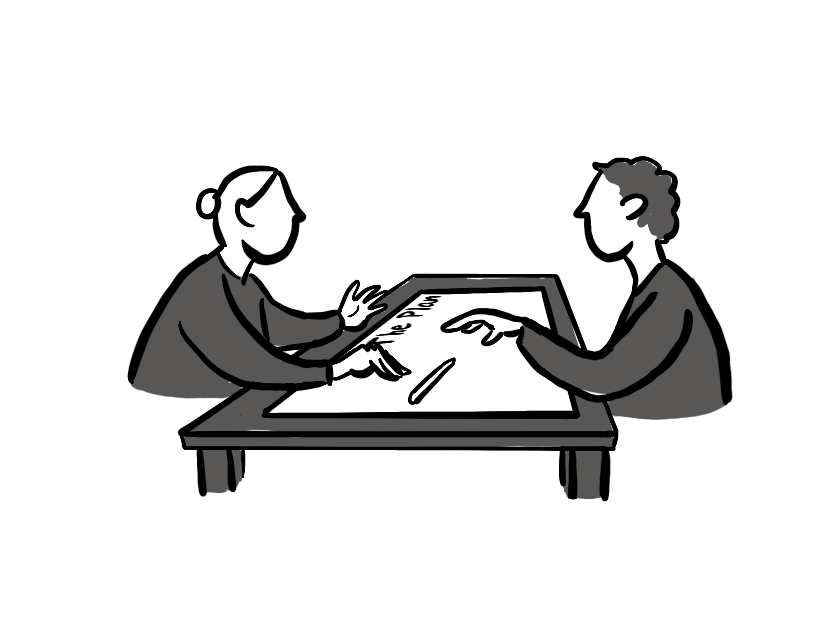
What I want to move towards now is a more consistent emphasis on this deeper, more involved way of working. These types of projects draw on the same core skills as graphic recording — listening, synthesis, translation, reflection — but they ask for a different kind of engagement that is iterative and co-creative. Here I move beyond capturing a moment, to collaborating with teams over time to understand their language, their landscape, their way of seeing the world. From that deeper understanding I can help them find a visual expression of the direction and underlying structure of their work that feels accurate, usable, and owned by them.
This way of working stimulates me intellectually and creatively, making better use of my strengths as a generalist and allowing me to reach into my wider skill sets and training in facilitation and process design through my Master’s degree in Strategic Leadership towards Sustainability. And it gives more space to something that has always been present for me: a strong motivation to come alongside people working in complex high-pressure environments and engaged in purpose-driven work — to fully appreciate it, make it visible and to reflect it back in a way that strengthens them.
-
Bringing together what you do, why you do it, and how change happens into a single, layered, coherent visual.
-
Translating multi-year plans into a single visual framework or a series of illustrations.
-
Creating space for shared visual reflection that helps people step back and reconnect with their colleagues and shared purpose.
-
Visually supplementing communication materials like one-pagers or slide decks for partners, funders, internal alignment and selected audiences
Moving forward
In many ways, this is a continuation of what I have already been doing. But it is also a clear shift in emphasis. I will continue to take on selected graphic recording engagements where they feel like the right fit. Alongside that, I am now focusing more deliberately on longer-term, strategic collaborations with teams.
If you are working on a strategy, developing a theory of change, preparing for a retreat, or looking for ways to communicate your work more clearly and coherently — this is the kind of work I am now offering more of.
If that resonates, I would love to be in conversation.